How much protein is in chicken breast? Raw vs cooked (2026)
Cooked chicken breast has about 31 g of protein per 100 g; raw has about 23 g. Why the numbers differ, how much is in one breast, and how to log it right.
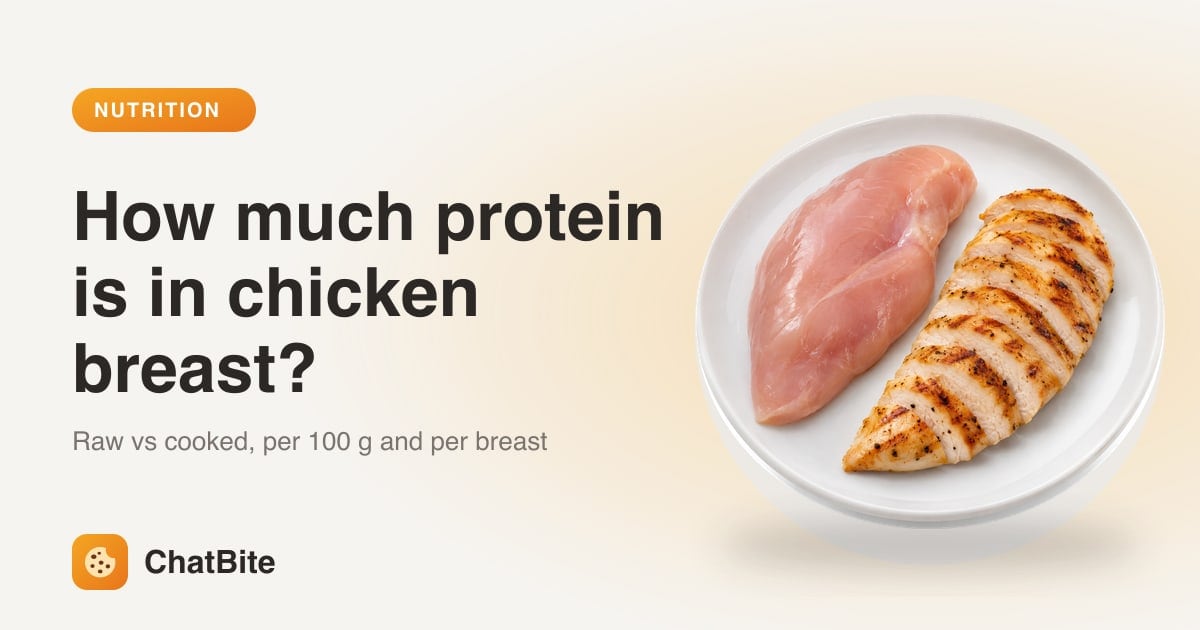
Cooked, skinless chicken breast has about 31 grams of protein per 100 grams (and about 165 calories). Raw chicken breast has about 22.5 to 23 grams per 100 grams. Both numbers are right: cooking drives out water, so the same piece of meat weighs less but holds the same protein. With protein the biggest food trend of 2026, “protein in chicken breast” is one of the fastest-rising food searches of 2026, according to search-trend trackers. Here's everything you need to know to count it correctly.
How much protein is in 100 g of chicken breast?
| Chicken breast, skinless (100 g) | Protein | Calories |
|---|---|---|
| Raw | about 22.5–23 g | about 110–120 kcal |
| Cooked (roasted or grilled) | about 31 g | about 165 kcal |
Values are from USDA FoodData Central. Brands, cooking methods and how long the chicken is cooked shift them slightly, but these are reliable everyday numbers.
Why does cooked chicken have more protein than raw?
It doesn't gain protein; it loses water. As chicken cooks, it shrinks, so 100 g of cooked meat contains more chicken than 100 g of raw. You can see it in the numbers: 22.5 ÷ 31 ≈ 0.73, so 100 g of raw breast ends up as roughly 73 g once cooked, still holding the same 22.5 g of protein.
This is the most common chicken-logging mistake: weighing chicken cooked but logging it with raw values (or the other way round). Using raw numbers for cooked chicken under-counts your protein by about a quarter. Match the numbers to the way you weighed it.
How much protein is in one chicken breast?
It depends on the size, and breasts vary a lot. The easiest way is to check the pack weight or weigh it once, then multiply.
| Your chicken breast | Protein (about) |
|---|---|
| 150 g raw | 150 × 0.225 ≈ 34 g |
| 200 g raw | 200 × 0.225 ≈ 45 g |
| 100 g cooked (about palm-sized) | 31 g |
| 150 g cooked | 150 × 0.31 ≈ 46 g |
A cooked palm-sized portion of about 100 g gives roughly 31 g of protein, which on its own covers the 20 to 40 g most people aim for at a meal.
Chicken breast vs thigh vs drumstick: which has the most protein?
| Cut (skinless, cooked, 100 g) | Protein (about) |
|---|---|
| Breast | 31 g |
| Thigh | 24–25 g |
| Drumstick | 24 g |
Breast is the leanest and highest in protein per gram. Thighs and drumsticks have a little less protein and more fat, which makes them juicier and often cheaper. All three are excellent protein sources; the skin and any breading or batter add calories, mostly from fat.
How does chicken compare with other protein foods?
| Food | Portion | Protein (about) |
|---|---|---|
| Chicken breast, cooked | 100 g | 31 g |
| Tuna, canned in water, drained | 100 g | 25 g |
| Salmon, cooked | 100 g | 22–25 g |
| Lentils, cooked | 1 cup | 18 g |
| Greek yogurt, plain, non-fat | 170 g pot | 17 g |
| Tofu, firm | 100 g | 15–17 g |
| Eggs | 2 large | 12–13 g |
Per calorie, cooked chicken breast is hard to beat: about 165 calories for 31 g of protein works out to roughly 5.3 calories per gram of protein. Vegetarian options like lentils and tofu bring fibre and other nutrients, so a mix of sources is the healthiest approach.
Does the cooking method change the protein?
Not much. Grilling, roasting, baking, poaching and air-frying all leave you with roughly the same protein per 100 g of cooked meat. What changes is the fat: frying, breading, creamy sauces and butter add calories without adding protein. A grilled breast with a squeeze of lemon and a creamy curry made with the same breast can differ by a few hundred calories.
How to log chicken correctly
- Say whether it's raw or cooked weight, and use the matching numbers.
- If you don't weigh it, estimate by palm size: about 100 g cooked.
- Mention the cooking style and sauce: “grilled”, “fried in breadcrumbs” or “in a butter sauce”.
- Count the oil you cooked it in: a tablespoon of olive oil adds about 120 calories.
ChatBite is an AI calorie and protein coach that works inside WhatsApp and Telegram: you send a photo, a few words or a voice note, and it logs your meal and tracks your day. Type “150 g grilled chicken breast with rice and salad” or send a photo of your plate, and it replies with the calories and protein, plus how close you are to your daily protein target. If the portion was bigger, just say so and it updates.
How much protein is in 100 g of chicken breast?
About 31 g when cooked and about 22.5 to 23 g when raw, for skinless breast, according to USDA FoodData Central.
Should I weigh chicken raw or cooked?
Either works, as long as you use the matching nutrition values. Raw weight is more consistent because cooking time changes how much water is lost.
How much protein is in one chicken breast?
It depends on the size. A 150 g raw breast has about 34 g of protein and a 200 g raw breast about 45 g.
Is chicken thigh lower in protein than breast?
Slightly: cooked skinless thigh has about 24 to 25 g of protein per 100 g, compared with about 31 g for breast, and a bit more fat.
How much chicken do I need for 30 g of protein?
About 100 g of cooked chicken breast, roughly the size of your palm.
Sources: USDA FoodData Central; National Chicken Council (USDA-derived nutrient data).
This article is general information, not medical advice. If you have kidney disease or another medical condition, talk to a doctor or registered dietitian about how much protein is right for you.
Values are typical estimates for home-style food and vary by recipe and portion. This is general information, not medical advice.
Put it into practice
Snap your next meal and ChatBite does the maths. Free for 7 days, no card needed.