How much protein do you need to lose weight? (2026 guide)
In 2026 the evidence still points to about 1.2–1.6 g of protein per kg of body weight a day for weight loss. Find your number and hit it with real meals.
If you're trying to lose weight, aim for roughly 1.2 to 1.6 grams of protein per kilogram of body weight a day. For someone who weighs 70 kg (154 lb), that's about 85 to 110 grams. That's well above the basic recommendation of 0.8 g/kg, and there's a good reason: when you eat less, extra protein helps you lose fat instead of muscle. This guide explains what the research says, how to work out your own number, and how to spread it across real meals.
Protein is 2026's biggest food trend. A November 2026 report from flavour company Givaudan found protein is the top nutrition priority for people taking GLP-1 weight-loss medicines, and high-protein products now fill supermarket shelves. The hype is new, but the science behind how much you need is well established, and it's simpler than the labels suggest.
Why does protein matter when you're losing weight?
When you eat fewer calories than you burn, your body draws on its stores, and some of what you lose can be muscle. Losing muscle is the opposite of what most people want: it makes you weaker and can make weight harder to keep off. Protein provides the building blocks your body needs to hold on to that muscle.
Protein also helps with the hard part of dieting: hunger. Meals built around protein tend to keep people fuller for longer than meals that are mostly refined carbs, which makes a calorie deficit easier to stick to.
What does the research say?
A well-known controlled trial published in The FASEB Journal (Pasiakos and colleagues, 2013) put 39 adults on diets with 0.8, 1.6 or 2.4 g of protein per kg a day, then cut their calories by 40% for three weeks. Everyone lost about the same amount of weight, but the groups eating 1.6 and 2.4 g/kg lost a smaller share of it as muscle and a bigger share as fat. Going from 1.6 to 2.4 g/kg didn't add a clear extra benefit.
That's why most current guidance for weight loss lands on 1.2 to 1.6 g/kg, rising toward 2.0 g/kg if you lift weights and are in a large calorie deficit. Sports nutrition groups such as the International Society of Sports Nutrition suggest 1.4 to 2.0 g/kg for people who exercise regularly.
How much protein should you eat per day? Find your number
Multiply your weight in kilograms by your target. If you know your weight in pounds, divide by 2.2 first.
| Body weight | Basic minimum (0.8 g/kg) | Weight loss (1.2–1.6 g/kg) | Lifting + big deficit (up to 2.0 g/kg) |
|---|---|---|---|
| 55 kg (121 lb) | 44 g | 66–88 g | up to 110 g |
| 70 kg (154 lb) | 56 g | 84–112 g | up to 140 g |
| 85 kg (187 lb) | 68 g | 102–136 g | up to 170 g |
| 100 kg (220 lb) | 80 g | 120–160 g | up to 200 g |
If you carry a lot of extra weight, using your current weight can give a very high number. A simple fix is to base it on a healthy goal weight instead, which keeps the target realistic.
How much protein per meal is best?
Spreading protein out works better than saving it all for dinner. Most research points to about 20 to 40 grams per meal, three to five times a day. For a 100 g daily target, that could be 30 g at breakfast, 35 g at lunch and 35 g at dinner, or four meals of about 25 g.
What foods give you the most protein?
Here are common foods from around the world, with approximate protein per typical portion (values from USDA FoodData Central; brands and cooking change them slightly).
| Food | Portion | Protein (about) |
|---|---|---|
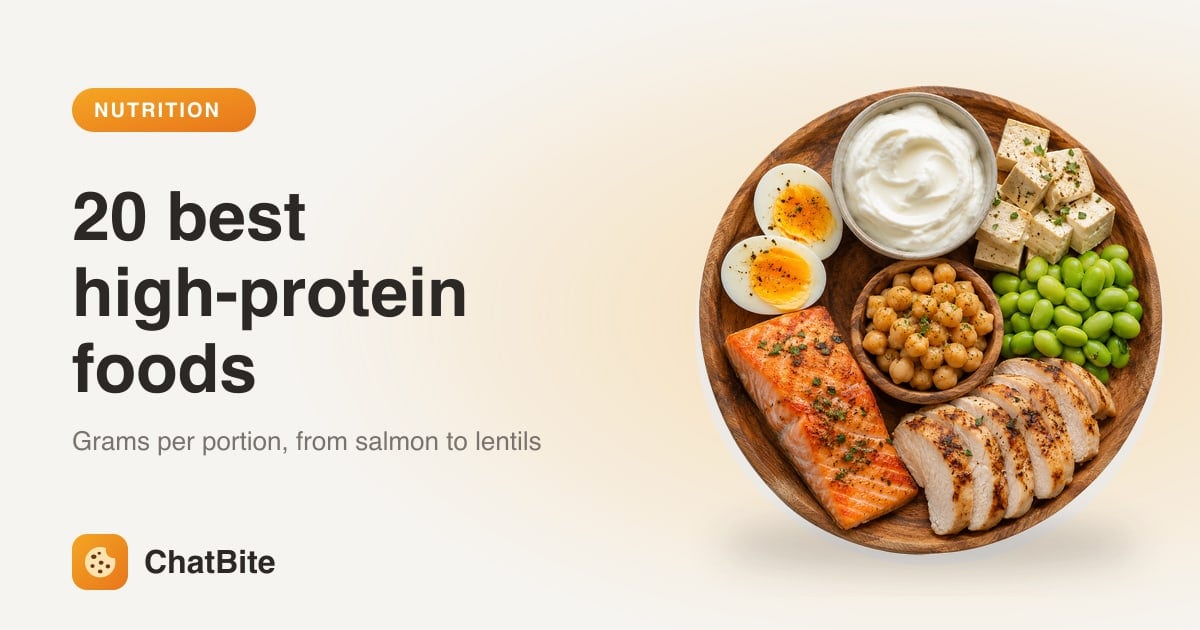
| Chicken breast, cooked | 100 g (palm-sized) | 31 g |
| Tuna, canned in water, drained | 100 g | 25 g |
| Salmon, cooked | 100 g | 22–25 g |
| Cottage cheese, low-fat | 1 cup (226 g) | 24 g |
| Greek yogurt, plain, non-fat | 170 g pot | 17 g |
| Lentils, cooked | 1 cup (198 g) | 18 g |
| Tofu, firm | 100 g | 15–17 g |
| Chickpeas, cooked | 1 cup (164 g) | 14 g |
| Eggs | 2 large | 12–13 g |
| Whey protein powder | 1 scoop | 20–25 g (check the label) |
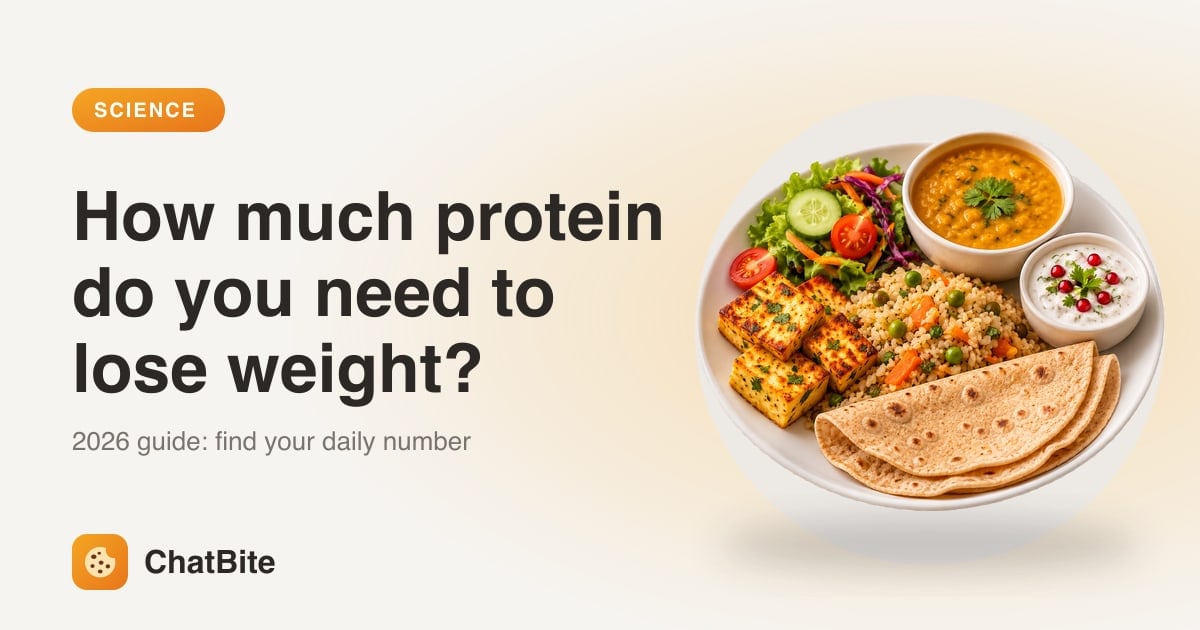
You don't need meat to hit your target. A vegetarian day can work with eggs or Greek yogurt at breakfast, lentils or chickpeas at lunch, tofu, paneer or cottage cheese at dinner, and a protein shake if you need a top-up.
An example 100-gram protein day
- Breakfast: 2 eggs on whole-grain toast with a 170 g pot of Greek yogurt (about 30 g).
- Lunch: a big salad or wrap with 100 g of chicken or 1 cup of lentils (about 18–31 g).
- Snack: 1 cup of cottage cheese with fruit, or a protein shake (about 20–24 g).
- Dinner: 100 g of salmon or firm tofu with vegetables and rice (about 15–25 g).
Add it up and you land between roughly 83 and 110 g, depending on your choices. Swap in whatever fits your cuisine and budget: the structure matters more than the specific foods.
Is high protein safe?
For healthy adults, the intakes above are widely considered safe. If you have kidney disease, are pregnant, or have another medical condition, talk to your doctor or a registered dietitian before raising your protein. The same goes if you take a GLP-1 medicine for weight loss: these drugs make you eat much less, so getting enough protein is harder, and your prescriber can help you set a target.
How to actually hit your protein target every day
The hardest part isn't knowing the number, it's knowing where you stand at 4 pm. Most people guess, and most people guess low. Tracking for even a couple of weeks shows you which meals carry your protein and which ones don't.
ChatBite is an AI calorie and protein coach that works inside WhatsApp and Telegram: you send a photo, a few words or a voice note, and it logs your meal and tracks your day. Every meal comes back with its protein, and a bar shows how close you are to your daily target, which ChatBite sets from your weight and goal. Ask “how much protein is left?” and you get an answer with foods that fit your diet.
How much protein do I need to lose weight?
Most people losing weight do well on about 1.2 to 1.6 g of protein per kg of body weight a day. People who lift weights during a large calorie deficit may benefit from up to about 2.0 g/kg.
Is 100 g of protein a day enough to lose weight?
For many people, yes. 100 g fits the 1.2–1.6 g/kg range for someone weighing roughly 62 to 83 kg (137 to 183 lb). Heavier people or those lifting weights may need more.
Can I eat too much protein?
Healthy adults generally tolerate intakes up to about 2 g/kg well. If you have kidney disease or another medical condition, ask your doctor before going high-protein.
Do I have to eat meat to get enough protein?
No. Eggs, dairy, lentils, beans, tofu, tempeh and protein powder can all get you there. Combining two sources at each meal makes it much easier.
Does protein help with hunger?
Yes. Protein-rich meals tend to keep people fuller than meals built mostly on refined carbohydrates, which makes eating a little less easier to sustain.
Sources: Givaudan GLP-1 consumer research (November 2026); Pasiakos et al., The FASEB Journal (2013); International Society of Sports Nutrition position stand on protein and exercise; USDA FoodData Central; National Academies of Sciences, Engineering, and Medicine (Dietary Reference Intakes).
This article is general information, not medical advice. If you have a medical condition, are pregnant or have a history of disordered eating, talk to a doctor or registered dietitian before changing your diet.
Values are typical estimates for home-style food and vary by recipe and portion. This is general information, not medical advice.
Put it into practice
Snap your next meal and ChatBite does the maths. Free for 7 days, no card needed.